Social Media Marketing vs. Having Your Own Website: Which is Better?
G.S.Soft
Author
For many small businesses in Nepal, the journey starts on a smartphone. You create a Facebook page, post a few photos on Instagram, or share a video on TikTok. Within hours, the messages start rolling in: "Price please?" or "Location?"
Social media is a fantastic way to get noticed, but is it enough to build a lasting business? As the digital landscape in Nepal evolves—with new e-commerce regulations and shifting consumer habits—the debate between "Social Media Only" and "Having a Website" has a clear winner.
Here is the breakdown of why you need both, but why a website is your true foundation.
1. Ownership vs. Renting
Think of social media like renting a stall in a busy bazaar. You get high foot traffic, but you don't own the space. If the "landlord" (Facebook or TikTok) changes the rules, increases the rent (ad costs), or closes the market (platform bans), your business disappears overnight.
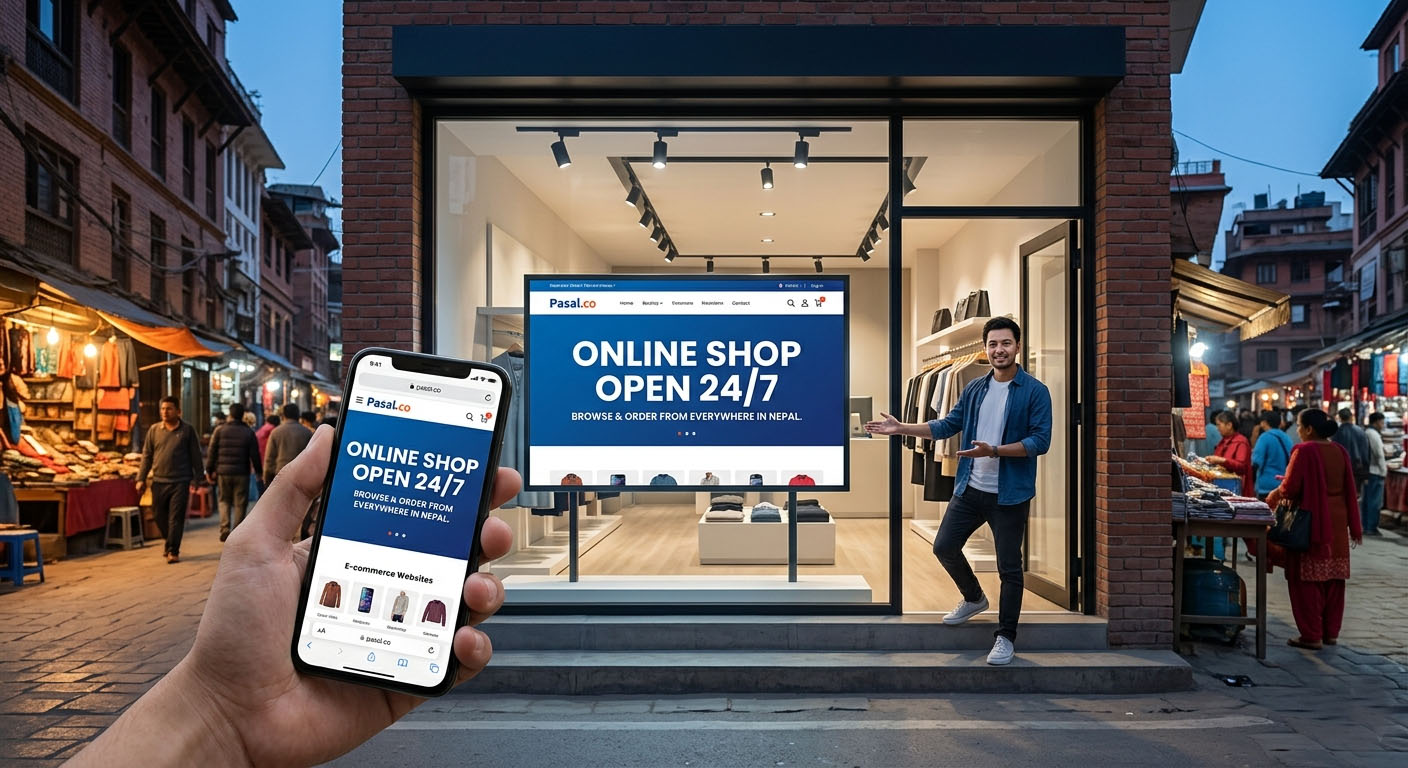
Owning a website on a platform like Pasal.co is like owning your own building. You control the design, the customer experience, and most importantly, you own your data. No algorithm change can take your storefront away from you.
2. The "Price Please" Problem (Automation)
If you sell on social media, your day is likely filled with replying to the same questions over and over again. This doesn't scale.
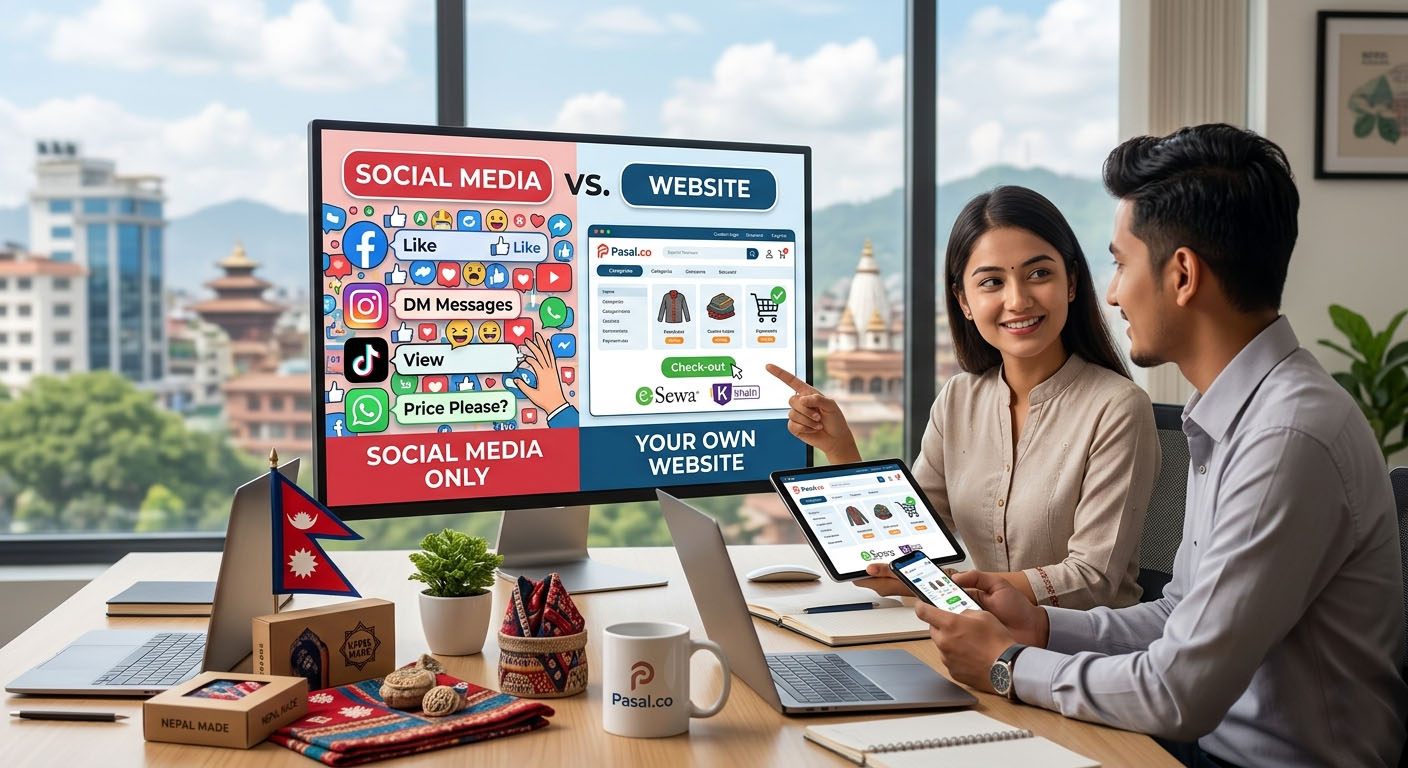
Social Media: You have to manually reply to every DM to close a sale.
Website: A customer finds your product, sees the price, reads the description, and pays via eSewa or Khalti—all while you are busy managing other parts of your business. A website turns your "Social Media Likes" into automated sales.
3. Professionalism and Trust
In Nepal, the "credibility gap" is real. With the rise of informal sellers, customers have become more cautious.
The Reality: A business with a professional website is viewed as more "pakka" (authentic) than one that only exists on Instagram.
A website allows you to display your VAT/PAN registration, clear return policies, and professional branding, which signals to the customer that you are a legitimate, long-term business.
4. Search Engine Visibility (Google)
When someone in Kathmandu searches for "best organic honey in Nepal," Facebook pages rarely show up on the first page of Google.
Websites rank; social posts fade. A blog post or a product page on your website can bring you customers for years. A social media post is usually "dead" after 48 hours. By having a website, you tap into the massive amount of traffic from people who use Google to research before they buy.
5. New Government Regulations
As of 2026, Nepal’s e-commerce laws have become stricter. The government now mandates that online businesses must be registered and follow specific ICT standards. Having a formal website makes it much easier to comply with these regulations, issue electronic invoices, and maintain the transparency required by law.
The Winning Strategy: The Hybrid Model
It’s not about choosing one over the other. The most successful businesses in Nepal use Social Media for Discovery and their Website for Conversion.
Use TikTok/Instagram: To show off your products, run ads, and catch people's attention.
Link to your Website: Direct that attention to your Pasal.co store where the customer can checkout securely.
Comparison Table
Feature | Social Media (FB/IG/TikTok) | Your Own Website (Pasal.co) |
|---|---|---|
Setup Cost | Free / Low | Affordable (NPR monthly) |
Ownership | You are a guest | You are the owner |
Sales Process | Manual (Chat-based) | Automated (Check-out) |
Trust Factor | Casual | Professional |
SEO | Very Low | High (Google search) |